A bearing cage, also called a bearing retainer or separator, is a component used in most rolling-element bearings to maintain proper spacing between the rolling elements. Depending on the bearing design, the rolling elements may be balls, cylindrical rollers, spherical rollers, tapered rollers or other types of rollers.
Although the cage does not normally carry the main radial or axial load of the bearing, it plays an important role in controlling the movement of the rolling elements. A properly designed cage helps prevent roller-to-roller contact, maintains an even distribution of rolling elements around the raceway, and supports stable operation at the required speed and lubrication conditions.
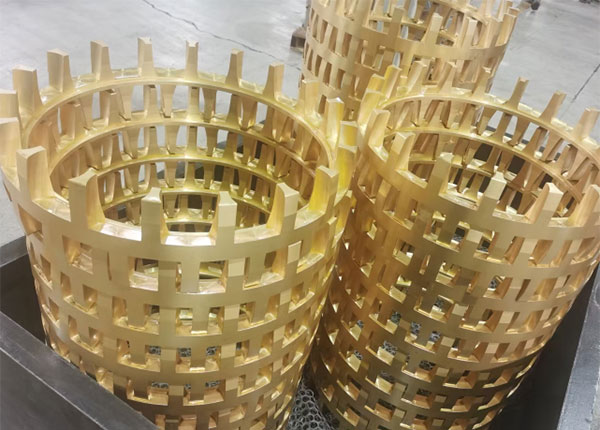
What Does a Bearing Cage Do?
The cage is a relatively small component compared with the rings and rolling elements, but its design has a significant influence on bearing operation. Its primary functions include separating the rolling elements, guiding their movement and maintaining their correct circumferential position.
Separates Rolling Elements
The cage maintains an appropriate distance between adjacent balls or rollers and helps prevent direct contact between them.
Guides Rolling Elements
The cage helps control the movement of the rolling elements as they circulate between the inner and outer rings.
Supports Stable Operation
Correct cage design helps maintain proper rolling-element distribution and reduces the risk of unstable movement.
Cage design becomes particularly important at high speeds, under heavy loads, during frequent acceleration and deceleration, and in applications where lubrication conditions are demanding.
Why Is the Bearing Cage Important?
Without an appropriate cage, rolling elements in many bearing designs would not maintain the required spacing and controlled movement. Direct contact between adjacent rolling elements can increase friction, heat generation and wear.
The cage also affects the internal behavior of the bearing. Its geometry, material, strength, clearance and guidance method must be compatible with the bearing’s operating conditions.
For this reason, the cage should not be considered simply a low-cost accessory. For industrial bearings operating under heavy loads or high speeds, cage selection is part of the overall bearing design.
Common Types of Bearing Cages
Bearing cages can be classified according to their manufacturing method, material and design. The most common manufacturing categories are stamped cages, machined cages and injection-molded cages.
1. Stamped Steel Cages
Stamped cages are manufactured from sheet steel using forming and stamping processes. They are widely used because they offer a practical combination of strength, weight and manufacturing cost.
Steel cages are commonly found in deep groove ball bearings, cylindrical roller bearings, spherical roller bearings and other general-purpose bearing designs. Depending on the bearing type, the cage may be guided by the rolling elements, inner ring or outer ring.
Stamped steel cages are particularly suitable for many standard industrial applications where a robust and economical cage design is required.
2. Machined Brass Cages
Machined brass cages are produced by machining brass blanks or similar materials. Compared with stamped cages, machined cages provide greater freedom in cage geometry and are often selected for demanding industrial applications.
Brass cages can provide good strength, wear resistance and resistance to certain operating conditions. They are widely used in heavy-duty roller bearings, large bearings and applications where cage strength is an important consideration.
For large spherical roller bearings and other heavy industrial bearings, machined brass cages are a common design option.
3. Machined Steel Cages
Machined steel cages combine the strength of steel with the flexibility of a machined cage design. They may be used when a bearing requires a robust cage capable of handling demanding loads or operating conditions.
The specific cage design depends on the bearing series, available internal space, speed, load, lubrication and the method used to guide the cage.
4. Polymer and Polyamide Cages
Injection-molded polymer cages, including polyamide cages, are lightweight and can provide favorable friction and noise characteristics. Their material properties can make them suitable for applications where low weight, low friction or specific lubrication characteristics are important.
However, polymer cage performance is temperature- and application-dependent. The material must be evaluated against the operating temperature, lubricant and chemical environment before being selected for an industrial application.
Bearing Cage Materials
The most appropriate cage material depends on the bearing type and operating conditions. Common materials include steel, brass and engineering polymers.
| Cage Material | Typical Characteristics | Common Applications |
|---|---|---|
| Stamped Steel | Lightweight, strong and economical | General industrial bearings and standard bearing designs |
| Machined Brass | Strong, robust and suitable for demanding conditions | Large and heavy-duty roller bearings |
| Machined Steel | High strength and flexible cage geometry | Heavy-duty and specialized bearing applications |
| Polyamide / Polymer | Low weight and favorable friction characteristics | Selected high-speed and general industrial applications |
How Cage Design Differs Between Bearing Types
There is no universal bearing cage design. The cage must be developed around the geometry and operating requirements of the bearing.
Cages in Ball Bearings
Ball bearing cages maintain separation between the balls and help guide them around the raceway. Depending on the bearing series, the cage may be made from stamped steel, brass or polymer materials.
Cages in Cylindrical Roller Bearings
Cylindrical roller bearing cages must control the position of relatively long rollers while allowing them to rotate and move correctly within the bearing. Cage strength and roller guidance become particularly important in high-load applications.
Cages in Spherical Roller Bearings
Spherical roller bearings contain two rows of spherical rollers. Their cage must maintain the correct roller spacing while accommodating the bearing’s self-aligning design.
For large spherical roller bearings used in mining equipment, vibrating screens, crushers and steel mill machinery, cage construction is an important part of the overall bearing specification.
Cages in Tapered Roller Bearings
Tapered roller bearings use tapered rollers arranged between the inner and outer raceways. The cage must retain and guide the rollers while maintaining the correct relative position of the rolling elements.
How to Choose the Right Bearing Cage
Cage selection should be considered together with the complete bearing specification rather than as an independent choice. Important factors include:
- Bearing type and series: Different bearing designs require different cage geometries.
- Load: Heavy radial or combined loads may require a stronger cage design.
- Speed: Cage behavior becomes increasingly important as bearing speed increases.
- Temperature: The cage material must remain suitable throughout the operating temperature range.
- Lubrication: Oil and grease lubrication can impose different requirements on cage design and material.
- Vibration and acceleration: Applications with shock, vibration or frequent speed changes require careful cage evaluation.
- Operating environment: Contamination, moisture and chemicals may influence material selection.
In most replacement bearing projects, the safest approach is to maintain the original cage design unless there is a specific engineering reason to change it.
What Happens When a Bearing Cage Fails?
Cage damage can result from several causes, including excessive vibration, insufficient lubrication, improper installation, contamination, excessive speed, misalignment or abnormal loading.
A damaged cage may cause uneven roller or ball spacing, abnormal noise, vibration and increased friction. In severe cases, cage failure can prevent the rolling elements from moving correctly and lead to rapid bearing failure.
When investigating a failed bearing, the cage should therefore be inspected together with the raceways, rolling elements, seals and lubrication condition. Cage damage is often a symptom of an underlying operating or installation problem rather than the original cause of failure.
Bearing Cage Selection for Industrial Applications
In industrial machinery, cage requirements can vary considerably from one application to another. Bearings used in rolling mills, mining equipment, crushers, vibrating screens, cement plants and other heavy-duty machinery may operate under high loads, vibration and demanding lubrication conditions.
For these applications, the bearing manufacturer should consider the complete operating environment before recommending a cage design. Bearing size, internal geometry, cage material, clearance, lubrication and operating speed should be evaluated together.
Can the Cage Be Changed in a Replacement Bearing?
A different cage material or design should not be treated as a simple substitution. Even when the bearing dimensions are identical, changing the cage can affect internal bearing performance.
For a replacement bearing, the original bearing designation, cage type and operating conditions should be reviewed before approving an alternative design. This is especially important for large and high-value industrial bearings where an incorrect cage specification can affect service life and operating stability.
JYHY Group Bearing Manufacturing and Replacement Support
JYHY Group supplies medium and large industrial bearings for demanding applications, including spherical roller bearings, cylindrical roller bearings, tapered roller bearings and specialized backing bearings.
For replacement projects, we can evaluate bearing requirements based on the original bearing number, dimensions, drawings or application conditions. Cage material and design can be reviewed together with the complete bearing specification.
For more information about bearing production and quality control, see our backing bearing manufacturing information and explore our backing bearing range.
Need a Bearing Replacement?
Send us the original bearing number, dimensions or drawing. JYHY Group can help evaluate the bearing configuration, cage design and other key specifications for your application.
Conclusion
A bearing cage is much more than a component that holds the rolling elements in place. Its primary functions are to separate and guide the rolling elements and maintain their correct distribution within the bearing. Cage material and design must be matched to the bearing type, load, speed, temperature, lubrication and operating environment.
Steel, brass and polymer cages each have their own advantages, while stamped and machined cage designs serve different engineering requirements. For demanding industrial and replacement bearing applications, selecting the correct cage design is an important part of ensuring reliable bearing operation and service life.