Cylindrical roller bearings are engineered for high radial load capacity and precision performance in industrial machinery. Unlike ball bearings, their line contact design distributes loads more effectively, making them ideal for heavy-duty applications.
This guide details eight key types—N, NU, NJ, NF, NUP, NFP, RN, and RNU—explaining their rib designs, axial load capabilities, and application suitability. Whether you need bidirectional axial movement support or heavy-duty rotational stability, this technical breakdown will guide your selection.
N N-Type Cylindrical Roller Bearings
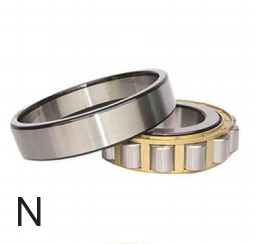
Rib Configuration
- Outer ring: No ribs
- Inner ring: Ribs on both sides
Axial Load Capacity
Allows bidirectional shaft displacement relative to the bearing seat. No axial load support.
Applications
Precision machinery, pumps, and fans
NU NU-Type Cylindrical Roller Bearings
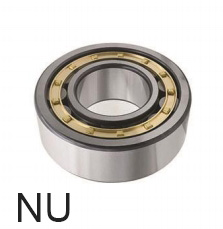
Rib Configuration
- Outer ring: Ribs on both sides
- Inner ring: No ribs
Axial Load Capacity
Supports bidirectional axial displacement. No axial load support.
Applications
Automotive transmissions, conveyor rollers
NJ NJ-Type Cylindrical Roller Bearings
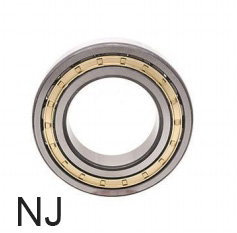
Rib Configuration
- Outer ring: Ribs on both sides
- Inner ring: Rib on one side (fixed), separable flat retainer on other
Axial Load Capacity
Withstands unidirectional axial load in one direction.
Applications
Mining equipment, agricultural machinery
NF NF-Type Cylindrical Roller Bearings
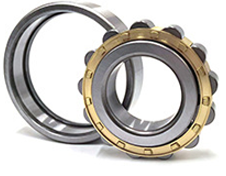
Rib Configuration
- Outer ring: Rib on one side
- Inner ring: Ribs on both sides
Axial Load Capacity
Supports unidirectional axial load.
Applications
Machine tools, robotics
NUP NUP-Type Cylindrical Roller Bearings
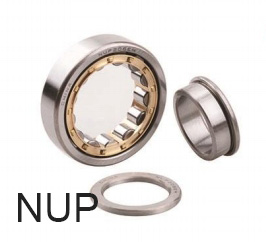
Rib Configuration
- Outer ring: Ribs on both sides
- Inner ring: Fixed rib on one side, separable flat retainer on other
Axial Load Capacity
Allows bidirectional axial displacement with locking mechanisms. Can support light axial loads.
Applications
Gearboxes, marine propulsion systems
NFP NFP-Type Cylindrical Roller Bearings
Rib Configuration
- Outer ring: Fixed rib on one side, separable flat retainer on other
- Inner ring: Ribs on both sides
Axial Load Capacity
Limited bidirectional axial movement.
Applications
Steel mills, foundries
RN RN-Type Cylindrical Roller Bearings (No Outer Ring)
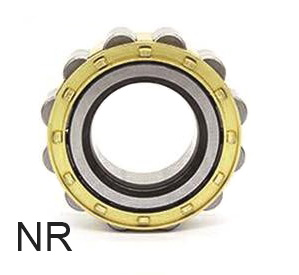
Rib Configuration
- Outer ring: None
- Inner ring: Double ribs
Axial Load Capacity
Supports radial loads only. No axial load capacity.
Applications
Electric motors, high-speed spindles
RNU RNU-Type Cylindrical Roller Bearings (No Inner Ring)
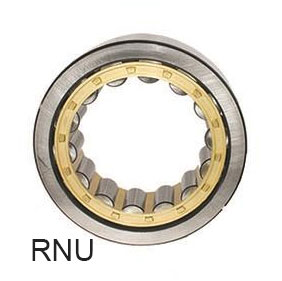
Rib Configuration
- Outer ring: Double ribs
- Inner ring: None
Axial Load Capacity
Radial load-focused design. No axial load capacity.
Applications
Aerospace components, robotics
Quick Selection Guide: Choose the Right Type
| Type | Outer Ring Ribs | Inner Ring Ribs | Axial Displacement | Axial Load Support | Best Application |
|---|---|---|---|---|---|
| N | None | Both sides | Bidirectional | None | High-speed pumps |
| NU | Both sides | None | Bidirectional | None | Transmissions |
| NJ | Both sides | One side fixed | Unidirectional | One direction | Vibratory screens |
| NF | One side | Both sides | Unidirectional | One direction | Machine tools |
| NUP | Both sides | One side + retainer | Bidirectional (locked) | Light axial | Gearboxes |
| NFP | One side + retainer | Both sides | Limited bidirectional | Limited | Steel mills |
| RN | No outer ring | Double ribs | None | None | Electric motors |
| RNU | Double ribs | No inner ring | None | None | Aerospace |
How to Select the Right Cylindrical Roller Bearing
Selecting the right cylindrical roller bearing depends on three factors:
- Axial displacement requirements: N/NU for free movement, NJ/NF for one-direction location, NUP for fixed position
- Axial load needs: NJ/NF for unidirectional loads, NUP for light bidirectional loads
- Space constraints: RN/RNU for ultra-compact designs where housing or shaft serves as raceway